From Cradle to Career: Following the Evidence and What We've Learned (So Far)
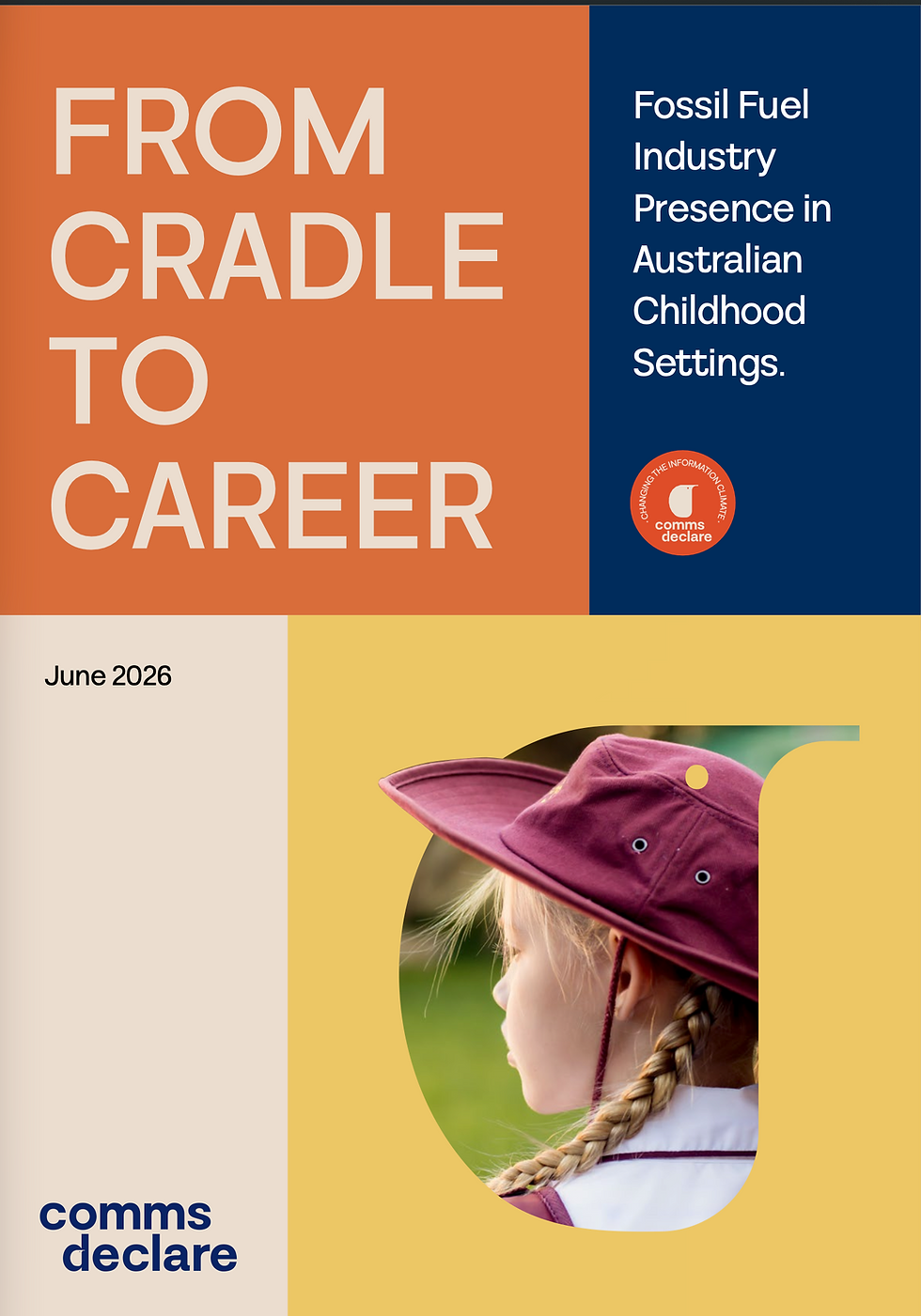
I'm only now coming up for air after the release of From Cradle to Career, our six-month investigation into fossil fuel industry engagement with Australian children and young people. It's a project that has shaken up educators, parents, parliamentarians and community organisations across the country, seen dozens of news headlines, and is now the subject of a potential Senate Inquiry.
Phew! What a time!
Although From Cradle to Career was released in June, of course, this story doesn't begin with us. Many good people have been raising concerns about fossil fuel industry involvement in schools and other trusted institutions for years. Teachers questioned classroom resources, parents challenged sponsorship arrangements, health experts highlighted the impacts of fossil fuels on children's health, and campaigners working on advertising and corporate influence kept asking why these relationships had attracted so little scrutiny. It is their persistence, often over many years, that has brought us to this moment.
One of the things that has struck me most throughout this investigation is the breadth of people who have found themselves invested in it. In the climate movement, it's relatively rare to see teachers, psychologists, public health experts, tobacco control advocates, parents, academics and environmental organisations all gathered around the same table. They each came with different expertise and different perspectives, but there was a growing sense that everyone was describing part of the same phenomenon without being able to see the whole picture.
That's what Cradle has tried to do - to give us all a baseline to work from when determining just how integrated Australia's biggest fossil fuel companies have become in our kids' lives. And the results were... astonishing.
As we followed the evidence, it became increasingly clear that we weren't documenting a series of isolated programs or sponsorships. We were uncovering an ecosystem: one that stretches from early childhood through to career pathways, weaving through schools, museums, sporting organisations, community programs, teacher professional development and universities. Viewed individually, many of these partnerships can appear ordinary, even beneficial. Viewed together, they reveal something much bigger: a sustained network of relationships that helps embed fossil fuel companies within trusted institutions throughout childhood.
As a climate campaigner, I wasn't tremendously surprised. But as a parent, a citizen, even (however naff that may sound) - I just couldn't believe it. Could this all be happening in front of us all, hidden in plain sight?
Over the weeks leading up to the launch, we briefed one group after another on the findings. More than 260 programs across the country, worth millions of dollars and potentially reaching millions of Australian children throughout every stage of their development. And in every briefing, no matter who the audience, the reaction was remarkably consistent. There were the same stunned expressions, the same anger and frustration, the same disbelief that this could not only be happening right under our noses, but that it could also be almost entirely unregulated.
I found myself almost building a pause into each presentation. We'd work through the evidence and the scale of what we'd uncovered, and then I'd give people a moment to simply sit with it before moving on. You could almost see them recalibrating what they thought they knew. The questions that followed were rarely about the numbers themselves. They were much more fundamental: How is this allowed? Why hasn't anyone been doing anything about this?
It's part of why the report has resonated well beyond the climate movement. Initial reactions of dismay and concern aside, the concerns are plentiful and cut across us all: people working in education see questions about independence and the purpose of learning. They (rightly) wondered how there could be so much pressure on teachers to deliver the curriculum accurately and objectively, yet fossil fuel companies' engagement with children, often treated as "curriculum adjacent", can enter schools with effectively no independent oversight or scrutiny. Health professionals see another example of industries associated with harm seeking credibility through trusted institutions. Parents see organisations they rely on every day being co-opted by companies driving the crisis that their children will be left to deal with. Researchers see a field that has received remarkably little attention. Each perspective adds another piece to the puzzle, and together they paint a picture that none of us could have assembled alone.
The next chapter comes on 12 August, when the Senate is expected to vote on whether to establish an inquiry into fossil fuel industry engagement with children and young people. It's fitting that the vote is scheduled for International Youth Day. Regardless of the outcome, I think we've reached an important point in the conversation. This is no longer a niche issue raised by a handful of campaigners; it's a national discussion about the role of trusted institutions, corporate influence and the environments in which children learn and grow. If not for our kids, then who is this all for?

Comments